
.svg)
Same Day Delivery for Businesses That Keeps Work Moving
Same day delivery for businesses helps teams protect critical schedules, reduce downtime, and manage urgent shipments with clear operational control each day.


.avif)
.avif)
.avif)
.avif)
.avif)
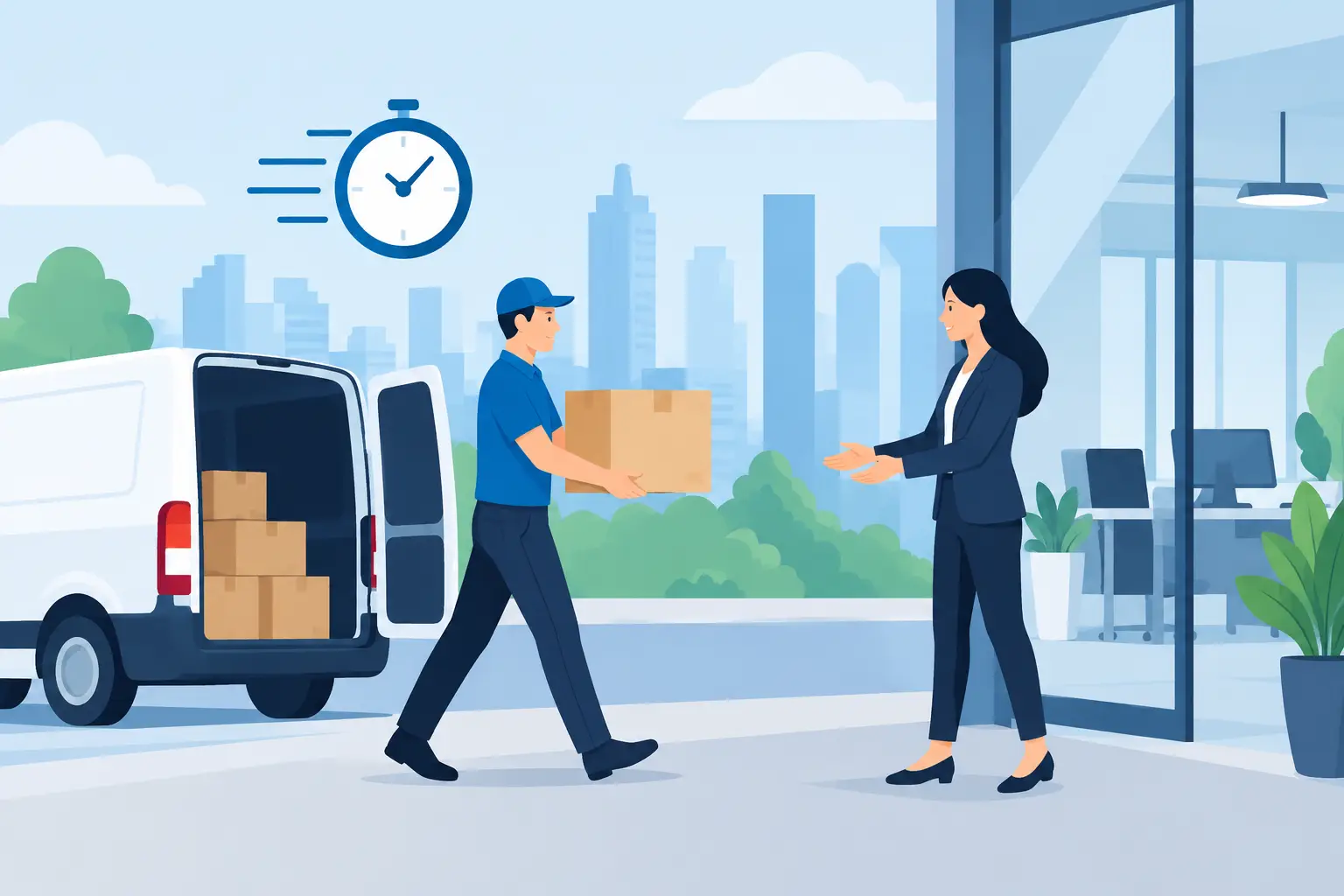
A production line is waiting on a replacement part. A retail location needs inventory before the afternoon rush. A field technician needs equipment at a customer site before a service window closes. In each case, same day delivery for businesses is not a convenience purchase. It is an operating decision that can protect revenue, labor productivity, customer commitments, and business continuity.
For commercial teams, the question is rarely whether a shipment can move quickly. The real question is whether it can move quickly with the right handling, visibility, capacity, and proof of completion. A delivery that arrives on time but goes to the wrong entrance, misses a receiving cutoff, or lacks chain-of-custody documentation still creates work for the operation.
Why Same Day Delivery for Businesses Has a Different Standard
Consumer delivery is typically built around a single destination and broad delivery windows. Business transportation has more variables. Shipments may need to move between warehouses, stores, offices, airports, job sites, fulfillment facilities, and customer locations. They may require a scheduled pickup, a direct vehicle, temperature control, inside delivery, liftgate capacity, or a driver who can follow site-specific instructions.
That changes how businesses should evaluate same-day service. Speed matters, but execution matters more. A capable delivery operation coordinates the shipment from order intake through dispatch, routing, pickup, live status updates, delivery confirmation, and exception management.
For an operations leader, that means fewer calls to locate a driver, fewer last-minute decisions about which carrier can handle an unusual shipment, and less time spent rebuilding a delivery plan when priorities shift.
Urgent Does Not Always Mean Unplanned
Some same-day work is truly reactive. A critical machine component fails. A pharmaceutical shipment needs to move immediately. An executive team needs signed documents delivered before a filing deadline. Direct dispatch capacity is essential in those situations.
But many same-day transportation needs are predictable. Stores need replenishment on specific days. Medical offices need recurring supply runs. Distribution centers need regular transfers between facilities. A business can schedule these movements in advance while retaining the ability to add urgent stops when conditions change.
This mix of scheduled and on-demand transportation is often more efficient than treating every delivery as an emergency. It gives dispatch teams a stable operating plan without limiting their response capacity.
Where Fast Commercial Delivery Creates Measurable Value
The strongest use cases are tied to a clear operational consequence. If a late shipment creates downtime, lost sales, a missed appointment, a compliance issue, or an expensive recovery effort, same-day delivery can be the practical choice.
A retailer may use it to rebalance inventory between stores before a promotion. A construction or facilities team may use it to send parts, tools, and replacement equipment to active sites. An e-commerce operator may use it for local order fulfillment, returns, or inventory transfers. Healthcare, laboratory, and pharmaceutical teams may require controlled transportation and dependable handoff procedures for sensitive products.
Airport and aviation logistics create another distinct use case. Cargo, parts, documents, and equipment often move against strict flight schedules and security requirements. The delivery partner must understand timing, access procedures, and the cost of a missed cutoff.
The value is not limited to individual shipments. Over time, a well-managed same-day program can reduce the need to hold excess inventory at every location, lower the number of employee-run errands, and give customer-facing teams a more reliable answer when an order or replacement is needed quickly.
Build the Right Delivery Model for the Shipment
There is no single best service configuration. A small document delivery across town requires a different plan than a multi-stop retail route, a palletized freight transfer, or a temperature-sensitive medical shipment.
Direct delivery is usually the right fit when speed, security, or handling control outweighs the cost of dedicating a vehicle. The shipment moves from pickup to destination with minimal touches and without being combined with unrelated stops. This can be appropriate for high-value assets, critical parts, confidential materials, or deadline-sensitive freight.
Multi-stop routing is more effective when several locations need service within the same operating window. Route optimization can sequence stops based on geography, service times, vehicle requirements, and priority levels. The objective is not simply to drive fewer miles. It is to complete more useful work per route while protecting delivery commitments.
For recurring distribution, scheduled delivery programs can create consistency across daily, weekly, or seasonal routes. A business may set standing pickups, defined receiving windows, and service rules by location. That structure helps reduce dispatch friction and makes performance easier to measure.
Specialized shipments require additional planning. Temperature-controlled goods need the right equipment and monitoring process. White-glove deliveries may require inside placement, careful handling, appointment coordination, and packaging removal. Bulk freight and commercial relocation work require vehicle capacity, loading support, and a realistic view of dock access, site conditions, and labor needs.
Technology Should Reduce Dispatch Work, Not Add Another Dashboard
Fast delivery programs can become difficult to manage when teams rely on email threads, phone calls, spreadsheets, and disconnected carrier portals. The issue is not a lack of effort. It is that critical information is spread across too many systems.
A connected transportation platform gives operations teams a more controlled workflow. Orders can enter through a dashboard or API integration. Dispatch rules can account for shipment type, geography, deadlines, and service level. AI dispatch tools can help match work with available capacity, while route optimization improves multi-stop planning as conditions change.
Visibility should also be practical. Dispatchers need to know whether a shipment has been assigned, picked up, delayed, delivered, or requires intervention. Procurement and leadership teams need consistent reporting on service volume, cost patterns, on-time performance, and exception causes. Customer service teams need accurate status information without chasing multiple vendors for updates.
Technology does not replace experienced operations management. It gives that team better inputs and faster control when an order is late, a location is unavailable, traffic changes, or a priority shipment enters the network.
Questions to Ask Before Selecting a Provider
A provider may advertise same-day service, but the operating details determine whether it fits your business. Start with coverage. Can the provider support your current lanes, and can it scale to additional markets as your footprint grows? Nationwide reach is useful only when local execution remains dependable.
Next, look at service flexibility. Your operation may need small-package delivery one day, a dedicated vehicle the next, and a scheduled multi-stop route later in the week. Working with separate vendors for every requirement can create inconsistent processes, fragmented billing, and limited visibility.
Ask how the provider manages exceptions. Late pickups, incorrect addresses, unavailable receivers, damaged packaging, and access restrictions are part of commercial transportation. A reliable partner has clear escalation procedures and can communicate quickly when a delivery plan needs to change.
Finally, confirm that handling requirements are documented before dispatch. This includes pickup contacts, receiving hours, vehicle restrictions, temperature needs, delivery instructions, proof-of-delivery requirements, and any chain-of-custody expectations. Clear data at order entry prevents avoidable failures in the field.
Make Same-Day Delivery Part of the Operating Plan
The most effective programs do not wait for a crisis to define their transportation process. They identify high-cost failure points, establish service levels for those lanes, and create a clear path for urgent requests. A store replenishment run, a recurring warehouse transfer, and an emergency replacement part can all sit within the same transportation strategy, even though they require different dispatch decisions.
EtaFlex supports this approach by combining managed delivery capacity with AI dispatch, route optimization, fleet management, recurring scheduling, and integration options for commercial shippers. The goal is simple: give teams a dependable way to move urgent and recurring shipments without building a separate logistics operation for every delivery type.
When the next critical shipment appears, the best outcome is not a heroic recovery. It is a delivery process already designed to move the right item, on the right vehicle, to the right location before the business feels the disruption.
Related Posts
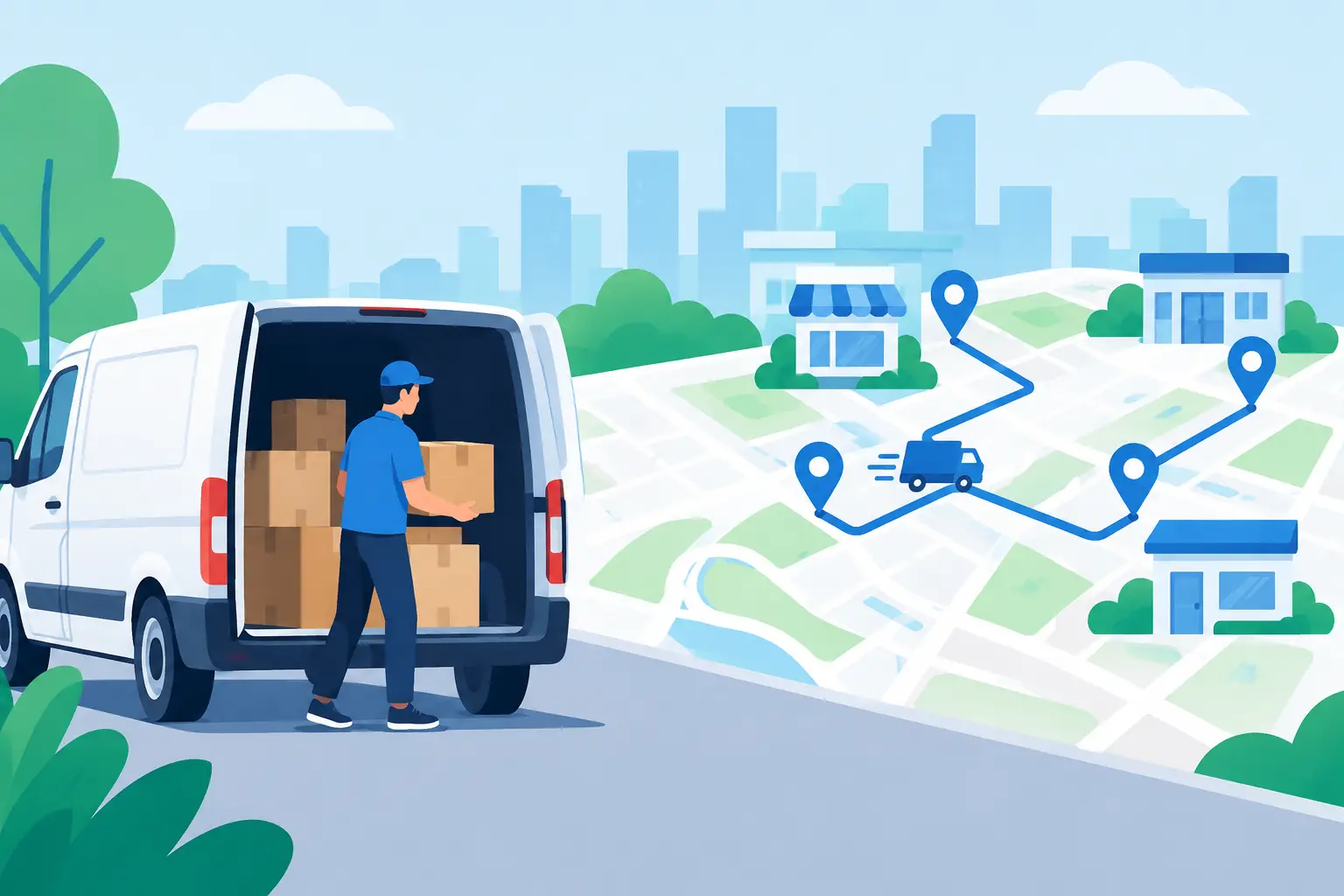
Scheduled delivery routes for businesses create planned capacity, dependable handoffs, and delivery visibility for recurring commercial work each workday.


Never Miss an Update
Subscribe to Our Newsletter
Stay informed with fresh logistics content delivered straight to your inbox.