
.svg)
Multi Stop Route Optimization Software That Delivers
Multi stop route optimization software helps delivery teams cut miles, protect service windows, manage exceptions, and run reliable daily operations at scale nationwide.


.avif)
.avif)
.avif)
.avif)
.avif)
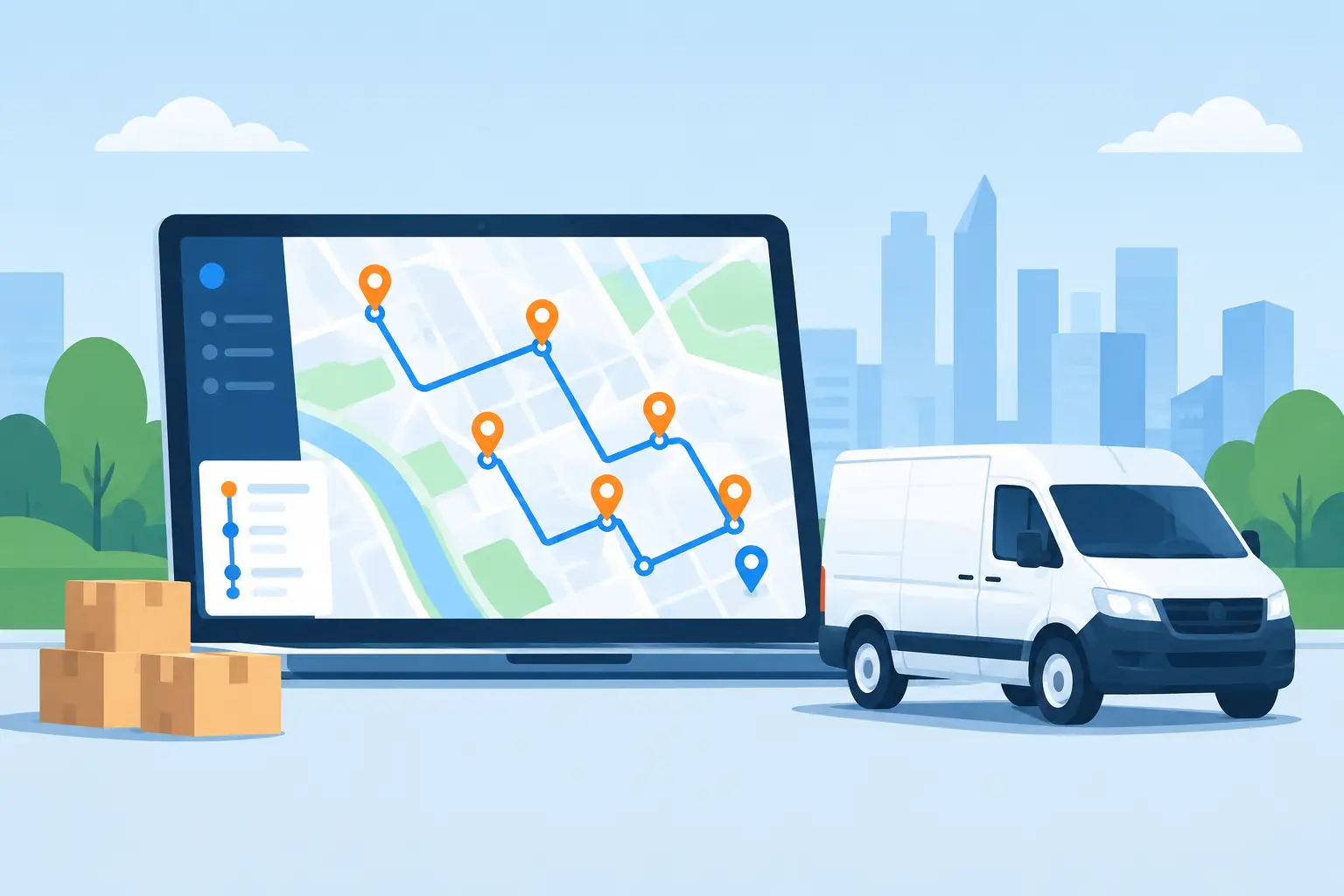
A route with 30 stops can look efficient on a map and still fail in the field. A late warehouse release, a customer receiving cutoff, an oversized item, or a driver running short on vehicle capacity can disrupt the entire day. Multi stop route optimization software gives dispatch teams a practical way to build delivery plans around real operating constraints, then adjust when conditions change.
For commercial shippers, the goal is not simply the shortest route. The goal is to complete more stops on time, use available vehicles well, keep customers informed, and protect the cost of every delivery run. That requires routing technology that works with dispatch operations rather than creating another disconnected system.
What Multi Stop Route Optimization Software Solves
Multi-stop routing is the process of arranging several pickups, deliveries, or service appointments into the most effective sequence for a driver or fleet. Software evaluates the variables that matter to the operation: stop locations, delivery windows, traffic patterns, vehicle capacity, driver schedules, service times, and shipment requirements.
Manual planning can work for a handful of predictable stops. It becomes less reliable when a team is coordinating recurring store replenishment, customer deliveries, returns, urgent replacements, and scheduled pickups across a metro area. Dispatchers may know their territories well, but spreadsheets and static map routes do not recalculate fast enough when an exception occurs at 10:30 a.m. and the next five stops still need to meet their commitments.
The right platform turns routing into an active operating process. It can assign orders to the best available vehicle, sequence stops based on time and distance, and give dispatch visibility into whether the plan remains achievable. When conditions change, the team can make a controlled adjustment instead of relying on phone calls, guesswork, and a driver’s memory of the area.
The Best Route Is Not Always the Shortest One
A shortest-distance route may send a driver to a customer before that receiving department opens. It may place a temperature-controlled shipment on a vehicle that will sit through an extended service stop. It may also overload one driver while another vehicle finishes early with unused capacity.
Effective route optimization balances miles with service requirements. For many B2B operations, a route should account for appointment windows, loading dock access, driver hours, vehicle type, product handling, pickup-before-delivery logic, and priority level. A medical supply distributor, for example, may need cold-chain handling and documented delivery. An equipment provider may need a cargo van with liftgate capability and a scheduled handoff at a job site. An e-commerce operator may prioritize dense delivery clusters and fast proof of delivery.
This is where configuration matters. A routing system should let operations teams set the business rules that define a successful route. If a late delivery costs more than an extra five miles, the software should optimize accordingly. If a customer requires a specific service window or a designated vehicle class, that requirement should be treated as a constraint, not a note that can be overlooked.
What to Look for in Multi Stop Route Optimization Software
The most useful systems support the full delivery workflow, from order intake through final confirmation. Mapping alone is not enough. A business needs a tool that helps the team make decisions, execute the route, and document the result.
When evaluating options, focus on these operational capabilities:
- Constraint-based route planning: The platform should account for time windows, capacity, service time, driver shifts, pickup and delivery order, and vehicle requirements.
- Dynamic dispatch controls: Dispatchers need the ability to add urgent stops, reassign work, and reoptimize active routes without losing visibility.
- Driver execution tools: Mobile access, route manifests, delivery instructions, barcode scanning, photo capture, signatures, and proof of delivery reduce avoidable follow-up.
- Real-time visibility: Operations teams should see route progress, late-stop risk, completed deliveries, and exceptions as they happen.
- Integration capability: API integration with order management, warehouse, e-commerce, or customer systems reduces duplicate entry and keeps dispatch data current.
- Reporting that supports decisions: Route cost, on-time performance, miles per stop, dwell time, failed-delivery reasons, and driver utilization should be measurable over time.
Not every operation needs every feature on day one. A growing local distributor may begin with recurring route schedules and live driver tracking. A regional shipper managing multiple facilities may need automated order ingestion, fleet management, specialized vehicle logic, and reporting by customer or business unit. The best fit depends on delivery volume, shipment complexity, and how much control the internal dispatch team needs.
Where Routing Projects Commonly Fall Short
Software cannot correct unclear operating rules. If delivery windows are not captured accurately, vehicle capacities are outdated, or order information arrives after drivers are dispatched, even advanced route logic will produce weak plans. Before implementation, teams should define the data they can rely on and the exceptions they expect to manage.
Another common issue is treating optimization as a one-time morning task. Same-day and on-demand operations change throughout the day. A driver may be delayed at a customer site, a pickup may not be ready, or a high-priority order may need to move immediately. The value of the system comes from its ability to help the dispatcher respond without creating a chain reaction of missed commitments.
Driver adoption also deserves attention. A route plan that looks efficient from a dashboard can be difficult to execute if delivery instructions are incomplete, customer contact details are missing, or the driver has no simple way to report an access issue. Good route optimization connects planning to field execution. It gives drivers clear stop information and gives dispatch a reliable feedback loop.
Turning Route Data Into Better Daily Decisions
Once routing is connected to dispatch and delivery confirmation, the operation begins to generate useful data. Over time, that data can reveal which customers require longer service times, where recurring delays occur, which routes regularly run under capacity, and whether service promises match actual field conditions.
That insight helps leaders make decisions beyond the route itself. They can adjust delivery windows, redesign territories, set more accurate customer expectations, add scheduled runs on high-demand days, or shift certain deliveries to a specialized provider. A fleet manager may find that two lightly loaded daily routes should be consolidated. A logistics director may see that a recurring route needs a larger vehicle, while urgent exceptions are better handled through on-demand capacity.
For California businesses serving dense commercial corridors in Los Angeles, Orange County, San Diego, the Bay Area, or Sacramento, local traffic and customer access rules can make this analysis especially valuable. A route that performs well on Tuesday may not be the right plan for Friday afternoon. Routing software should provide a repeatable framework while leaving room for experienced dispatchers to apply local knowledge.
Software Works Best With Execution Capacity
Some businesses only need technology for an in-house fleet. Others need both software and delivery capacity, particularly when order volume spikes, specialized handling is required, or coverage must extend beyond a single market. Those needs should not force a company to operate separate systems for routing, carrier management, and customer updates.
EtaFlex combines multi-stop route planning with managed delivery services, AI dispatch, API integration, recurring scheduling, and specialized transportation support. That model can help commercial teams maintain control of the delivery experience while adding capacity for same-day orders, scheduled distribution, reverse logistics, temperature-sensitive shipments, and white-glove work.
The right operating model depends on the business. A company with a stable fleet and consistent routes may prioritize software configuration and fleet visibility. A company with variable demand or limited internal transportation resources may benefit from a provider that can plan, dispatch, and execute the work through one connected workflow.
Build for Exceptions, Not Perfect Days
The real test of a routing platform is not whether it can organize a clean list of stops. It is whether the team can protect customer commitments when the day stops going according to plan. Start with accurate order data, define the constraints that truly matter, and measure results against on-time performance, cost, and service quality. A route plan should give your dispatch team more control when pressure rises, not more screens to manage.
Related Posts
Ecommerce fulfillment services help US businesses store, pick, pack, ship, and manage returns with speed, visibility, flexible capacity, and control daily.
Same day delivery for businesses helps teams protect critical schedules, reduce downtime, and manage urgent shipments with clear operational control each day.
Scheduled delivery routes for businesses create planned capacity, dependable handoffs, and delivery visibility for recurring commercial work each workday.
Never Miss an Update
Subscribe to Our Newsletter
Stay informed with fresh logistics content delivered straight to your inbox.