
.svg)
Bulk Freight Delivery Services That Keep Work Moving
Bulk freight delivery services help businesses move oversized, high-volume loads with scheduled capacity, tracking, and handling built around real operations.


.avif)
.avif)
.avif)
.avif)
.avif)
A late pallet is not just a late pallet. It can leave an installation crew waiting, interrupt a store reset, delay production materials, or force a customer site to reschedule labor. Bulk freight delivery services are designed for these operating realities: moving large, heavy, high-volume, or multiple-piece shipments with the right equipment, timing, and visibility.
For commercial shippers, the goal is rarely to find the lowest transportation rate on a single load. The real objective is to protect delivery performance without building excess fleet capacity, adding manual dispatch work, or accepting uncertainty when shipment requirements change. That requires a provider that can manage freight movement as part of the broader operation.
What Bulk Freight Delivery Services Cover
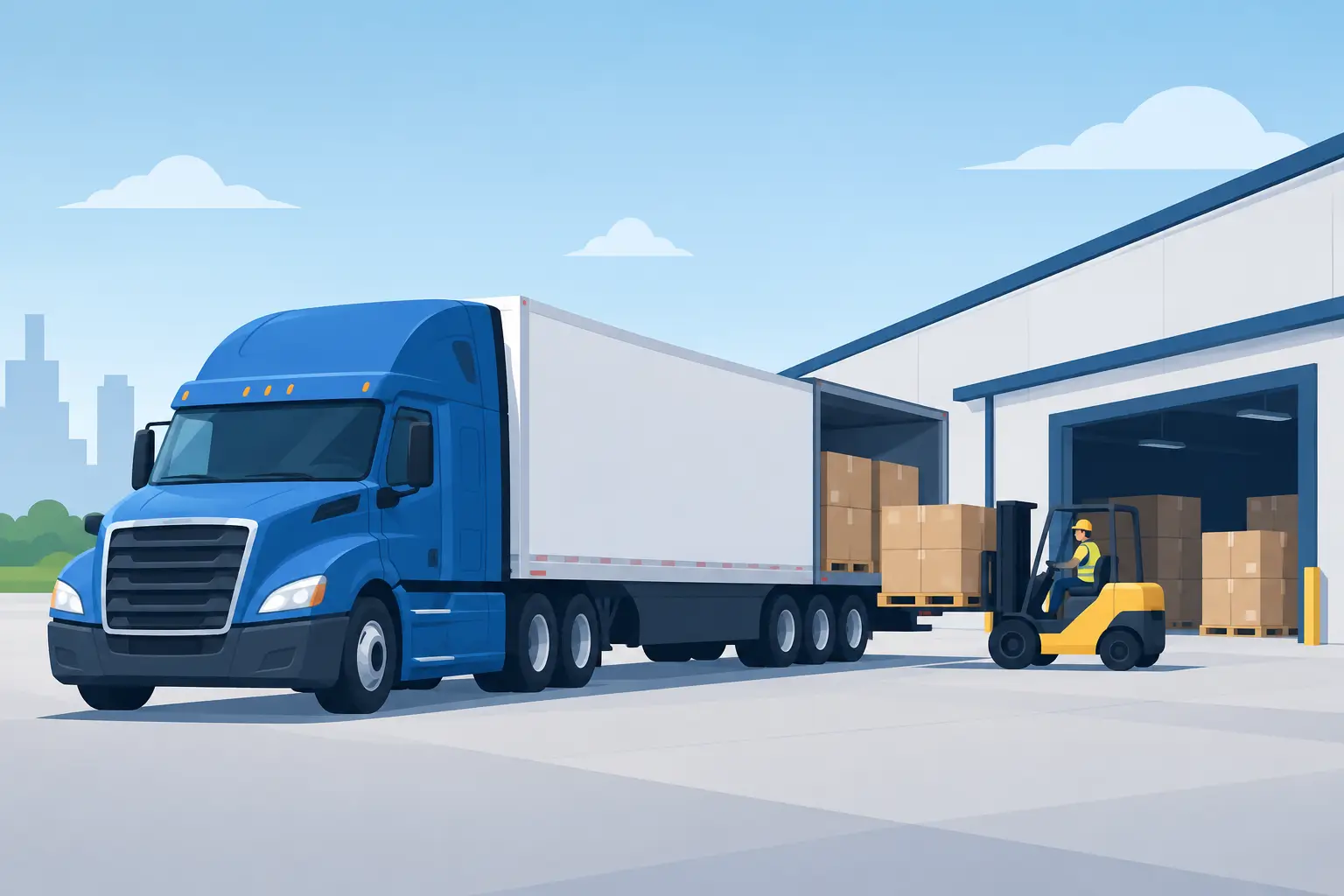
Bulk freight can mean different things depending on the business. A distributor may need recurring pallet deliveries to several stores. A facilities team may need equipment, fixtures, and supplies moved between offices. An e-commerce operator may need overflow inventory transferred from a warehouse to a fulfillment site. A construction supplier may need bulky materials delivered to active job sites within a defined window.
The common factor is that the shipment is too large, too heavy, too frequent, or too operationally sensitive for a standard parcel or small courier run. It may require a cargo van, box truck, liftgate vehicle, pallet jack, two-person crew, scheduled dock appointment, or white-glove placement. Freight that needs temperature control, chain-of-custody documentation, or return handling adds another layer of planning.
A capable bulk freight program should support both planned and exception-based movement. Scheduled routes work well for recurring distribution. On-demand capacity matters when inventory is short, a supplier misses a linehaul connection, or a customer requires same-day recovery. The right mix depends on shipment density, delivery windows, and how costly a delay would be.
The Operational Difference Between Freight and a Large Delivery
A large shipment does not automatically need a freight program. One oversized box moving from a warehouse to a nearby customer may be handled as a dedicated delivery. Freight management becomes more valuable when the load introduces handling, coordination, routing, or capacity complexity.
For example, ten pallets going to one distribution center may require appointment coordination and dock-ready equipment. Ten pallets going to five retail locations require route optimization, stop sequencing, proof of delivery at each location, and a plan for refused or returned goods. The shipment volume is similar, but the operating challenge is very different.
This distinction matters when selecting service levels. Overbuilding the solution raises cost. Underbuilding it creates delays, damages, missed appointments, and dispatch teams spending the day chasing status updates. A delivery provider should assess the actual movement pattern, not simply the dimensions of one load.
Questions that define the right service model
Before requesting capacity, operations teams should be clear on the load profile: total weight and dimensions, pallet count, loading and unloading requirements, dock access, delivery windows, and whether freight must be brought inside or placed at a specific location. They should also identify handling constraints such as temperature requirements, fragile equipment, high-value assets, or returnable packaging.
The delivery pattern is equally important. A recurring route with stable stops can be scheduled and optimized over time. A variable route may need flexible dispatch and live capacity. If a business has both, it should not have to use separate vendors and disconnected processes for each type of move.
Where Bulk Freight Delivery Services Create Value
The strongest freight programs reduce friction at the points where transportation affects the rest of the business. That can mean avoiding stockouts at high-performing locations, getting replacement equipment to a field team before a service window closes, or keeping a warehouse from becoming congested with inventory waiting for transfer.
For multi-stop distribution, route optimization is central. Stops should be sequenced around service windows, distance, vehicle capacity, loading order, and expected dwell time. The shortest route on a map is not always the best route in practice. A truck arriving early at a restricted site may wait longer than it saves in miles. A route that loads last-stop freight first can create unnecessary handling at every other stop.
Visibility also has direct commercial value. Dispatch teams need accurate status, not vague assurances that a load is “out for delivery.” Pickup confirmation, in-transit updates, proof of delivery, exception alerts, and clear communication give operations leaders time to respond before a small issue becomes a customer escalation.
In markets with dense commercial activity, such as Los Angeles, Orange County, San Diego, and the Bay Area, execution depends heavily on local operating knowledge. Traffic patterns, building access, delivery restrictions, dock hours, and appointment discipline can determine whether a route performs as planned. Nationwide coverage is useful, but local execution is what protects a time-sensitive delivery.
Technology Should Reduce Dispatch Work
Freight transportation still requires experienced people, reliable vehicles, and disciplined handling. Technology does not replace those fundamentals. It should make them easier to manage at scale.
An effective system connects order intake, dispatch, routing, driver communication, tracking, and reporting. API integration can move delivery orders from a shipper's warehouse, order management, or e-commerce system into the delivery workflow without rekeying information. This reduces errors and gives teams a consistent view of each shipment.
AI dispatch can help match loads to available capacity, prioritize urgent orders, and adjust plans when route conditions change. Fleet-management tools can support vehicle assignment, driver coordination, utilization tracking, and maintenance awareness. For recurring freight, scheduled-delivery tools keep repeat routes organized without requiring the same manual setup every day.
The practical test is simple: does the technology remove steps for the operations team while improving control? If staff still need to call for every update, copy shipment details into several systems, or rebuild routes manually, the workflow is not doing enough.
Choosing a Provider for High-Value or High-Impact Loads
Price matters, but a quoted rate does not show the full cost of a freight decision. A low-cost provider can become expensive if missed delivery windows create overtime, failed installations, lost sales, or a damaged customer relationship. Evaluate the provider's ability to execute the actual service requirement.
Look for clear capacity options, equipment suited to the load, and defined procedures for pickup, handling, delivery confirmation, and exceptions. Ask how the provider manages multi-stop routes, appointment deliveries, returns, and changes after dispatch. If sensitive products are involved, confirm temperature-control capability, secure handling, and documented chain of custody.
It is also worth asking how freight data will reach your team. Some businesses need simple status notifications. Others need API integration, detailed reporting, and delivery data that can be reconciled with internal systems. The right answer depends on shipment volume and process maturity, but the provider should be able to support growth without forcing a platform change later.
EtaFlex combines managed delivery capacity with route optimization, AI dispatch, recurring scheduling, and connected freight workflows for businesses that need a dependable extension of their transportation operation.
Build Freight Capacity Around the Work You Need Done
The best bulk freight strategy is not necessarily a dedicated truck for every load or a fixed route for every customer. It is a service design that matches capacity to demand. Use scheduled service where volume is predictable, dedicated capacity where timing and control are critical, and on-demand support where the operation needs fast recovery.
Start with a small set of measurable requirements: on-time performance, damage rate, delivery completion data, response time for exceptions, and cost per successful stop. Review those results against the business impact, not just the transportation invoice. When freight movement is planned around the work it enables, delivery becomes a controlled part of operations rather than a daily source of disruption.
Related Posts
Ecommerce fulfillment services help US businesses store, pick, pack, ship, and manage returns with speed, visibility, flexible capacity, and control daily.
Multi stop route optimization software helps delivery teams cut miles, protect service windows, manage exceptions, and run reliable daily operations at scale nationwide.
Same day delivery for businesses helps teams protect critical schedules, reduce downtime, and manage urgent shipments with clear operational control each day.
Never Miss an Update
Subscribe to Our Newsletter
Stay informed with fresh logistics content delivered straight to your inbox.