
Aviation Logistics Services That Keep Flights Moving
Aviation logistics services for time-critical parts, cargo, and equipment. Improve airport transfers, visibility, routing, and delivery control daily.


.avif)
.avif)
.avif)
.avif)
.avif)
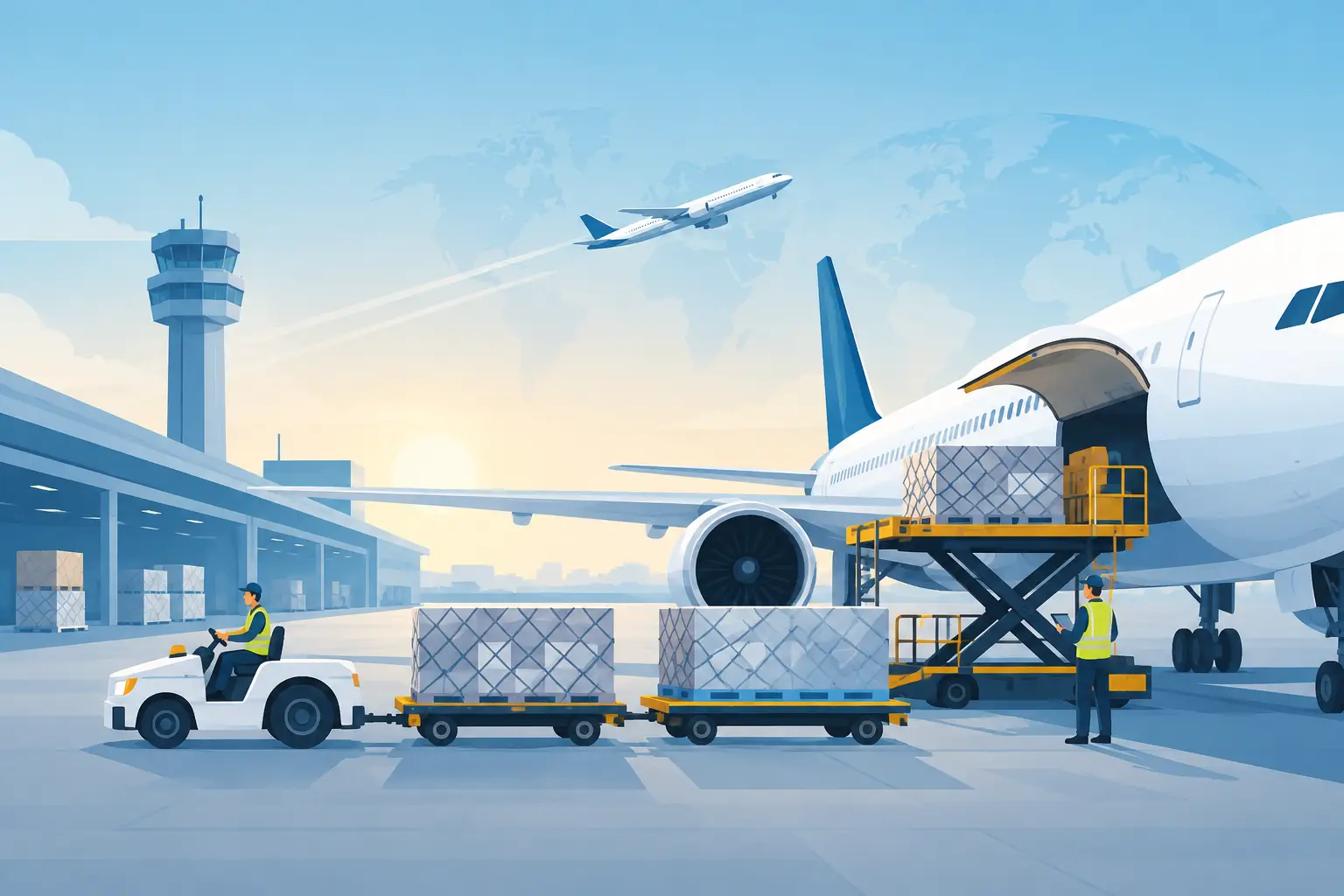
A grounded aircraft can turn a small missing component into a costly operational event within hours. Aviation logistics services exist to prevent that outcome by moving aircraft parts, maintenance equipment, documents, cargo, and supplies with the urgency and control aviation operations require. The work is not simply getting a package to an airport. It is coordinating the right vehicle, route, handoff, timing, and proof of delivery around an active transportation environment.
For airlines, MRO providers, FBOs, aviation suppliers, and airport-adjacent businesses, delivery performance affects more than a shipping metric. It can affect maintenance schedules, gate activity, crew planning, passenger experience, and revenue. A capable logistics partner helps operations teams respond quickly without creating a new layer of dispatch work.
What Aviation Logistics Services Cover
Aviation logistics is a broad category. It can include air cargo forwarding, but many of the most urgent requirements happen on the ground before or after a flight. Ground-side aviation logistics services support the movement of time-sensitive materials between warehouses, repair facilities, airports, terminals, hangars, fixed-base operators, and customer locations.
Common use cases include aircraft-on-ground part delivery, line maintenance support, inter-facility transfers, baggage or hospitality supply movements, flight documentation, and scheduled replenishment of consumables. The same operation may also need to move tooling, ground-support equipment, high-value electronics, or temperature-sensitive pharmaceutical shipments connected to air transport.
The service model should fit the shipment rather than force every job into a standard courier workflow. A single critical part may need immediate point-to-point delivery and direct coordination with a receiving contact. A maintenance network may need scheduled routes between a central stockroom and several airport locations. An aviation event may require staged equipment delivery, white-glove handling, and return logistics after teardown.
Why Airport Deliveries Require More Control
Airports operate with access rules, restricted zones, security checkpoints, traffic constraints, and handoff procedures that differ from normal commercial delivery. A driver can arrive on time and still lose valuable minutes if the receiving contact is unavailable, the entry instructions are incomplete, or the shipment is not labeled for the correct location.
That is why shipment visibility and dispatch coordination matter as much as vehicle speed. The delivery team needs clear instructions: who can accept the shipment, which gate or facility to use, what identification is required, whether a badge escort is needed, and how to document the final handoff. For sensitive parts and high-value assets, businesses may also require signature capture, photo confirmation, chain-of-custody records, or direct communication when the delivery is complete.
Speed remains essential, but it should be managed intelligently. Sending the closest available vehicle is not always the fastest answer if that vehicle lacks cargo capacity, appropriate equipment, or airport access readiness. Good dispatch weighs pickup distance, live traffic, delivery window, vehicle type, driver qualification, and route conditions before assigning the job.
The Operational Priorities Behind Fast Aviation Delivery
Aviation teams generally need three things from a logistics provider: rapid response, dependable execution, and accurate status information. Each depends on a connected operating process rather than a series of phone calls.
Rapid response starts with dispatch capacity. When an AOG request appears, the team must be able to confirm pickup details, assign a suitable driver, and provide a realistic estimated arrival time quickly. A delayed confirmation can be almost as disruptive as a delayed delivery because maintenance teams cannot plan around uncertainty.
Dependable execution comes from disciplined handoffs. The driver needs the correct part number or reference, pickup contact, delivery instructions, and handling requirements before leaving the origin. Dispatch should monitor exceptions, including pickup delays, road closures, changes in destination, or a receiving contact who is no longer available.
Accurate visibility closes the loop. Operations leaders should not need to repeatedly call for an update on a critical shipment. Real-time tracking, milestone notifications, proof of delivery, and accessible shipment records give maintenance and supply-chain teams the information they need to make the next decision.
Technology That Reduces Dispatch Friction
Aviation logistics can become difficult to manage when urgent requests, scheduled transfers, vendor pickups, and return movements are handled in separate systems. The result is fragmented visibility and avoidable manual work. Technology should make transportation easier to operate, not add another dashboard for teams to monitor.
API integration can connect delivery requests to a company’s existing order, maintenance, warehouse, or procurement workflow. That reduces rekeying and helps ensure dispatch receives complete shipment data. Recurring-delivery scheduling supports planned stock movements between distribution points, while fleet-management tools can help organizations coordinate their own vehicles alongside managed delivery capacity.
AI dispatch can further improve response times by matching orders to available capacity and route conditions. It is most useful when it supports experienced operational oversight. Aviation work often includes exceptions that require human judgment: a shipment may need a different vehicle, an alternate access point, or a direct call to the receiving team. Automation should accelerate routine decisions while giving dispatchers control when conditions change.
Designing the Right Aviation Logistics Program
The best transportation setup depends on the operational pattern. A company with infrequent emergency deliveries may only need on-demand coverage and a clear escalation process. A larger maintenance or supply operation may benefit from a blended model that combines scheduled routes, dedicated capacity during peak periods, and on-demand support for exceptions.
Before selecting a provider, define the shipment profile and failure points. Consider the locations served, cutoff times, typical package dimensions, required handling, airport access procedures, and the cost of a missed delivery window. It is also useful to separate true emergencies from predictable demand. Planned moves should be scheduled whenever possible, preserving urgent capacity for the events that cannot wait.
For businesses serving Southern California airports, route design can be particularly important. Traffic patterns between Los Angeles, Long Beach, Orange County, and inland facilities can change materially by time of day. Multi-stop route optimization helps reduce unnecessary miles for recurring runs, while on-demand delivery provides a faster response when a critical part must move outside the planned route.
A strong program also accounts for reverse logistics. Failed parts, repairable components, loaner equipment, packaging, and event materials all need a controlled return path. If returns are treated as an afterthought, inventory visibility suffers and urgent replacement shipments become more likely. Building reverse movement into the operating plan keeps assets circulating and reduces administrative cleanup.
Questions to Ask an Aviation Logistics Provider
Commercial buyers should look beyond a general promise of fast delivery. Ask how the provider handles airport-specific instructions, documents proof of delivery, manages after-hours requests, and communicates exceptions. Confirm what vehicle types are available for small parcels, oversized tooling, bulk freight, and temperature-controlled shipments.
It is also worth asking whether the provider can support both immediate and recurring needs. A vendor that handles one urgent delivery may not be equipped to manage a scheduled inter-facility route, a multi-stop replenishment program, or a return shipment with special handling. Consolidating those needs with one operating partner can reduce vendor coordination and produce clearer performance reporting.
EtaFlex supports aviation-adjacent transportation with on-demand, scheduled, multi-stop, specialized, and technology-connected delivery options. The goal is practical: move critical items quickly, provide clear delivery control, and keep the transportation process aligned with the operation it supports.
When aircraft parts, equipment, or airport-bound supplies cannot wait, the right logistics design gives teams more than a fast vehicle. It gives them a dependable operating response when timing matters most.
Related Posts
Bulk freight delivery services help businesses move oversized, high-volume loads with scheduled capacity, tracking, and handling built around real operations.
Ecommerce fulfillment services help US businesses store, pick, pack, ship, and manage returns with speed, visibility, flexible capacity, and control daily.

Multi stop route optimization software helps delivery teams cut miles, protect service windows, manage exceptions, and run reliable daily operations at scale nationwide.
Never Miss an Update
Subscribe to Our Newsletter
Stay informed with fresh logistics content delivered straight to your inbox.